Lughnasadh (Lammas): The First Harvest
So wherever you are, I hope you take a little time to step outside this evening or tomorrow. Look around. Breathe deeply. Thank the earth for another season
By Rosa Lunae
I’ve been looking forward to Lughnasadh for weeks.
There’s just something about the first harvest that feels… comforting.
Spring is exciting. Everything is new. Seeds are being planted, flowers are blooming, and there’s this feeling that anything is possible.
But Lughnasadh is different. It isn’t about beginnings. It’s about looking around and witnessing growth.
I think that’s why I love it so much.
I’m the kind of person who’s always looking ahead. What’s the next book I want to read? What’s the next class I want to take? What’s the next thing I want to learn?
Sometimes I get so focused on where I’m going that I completely forget to look back and see how far I’ve already come.
Lughnasadh reminds me to do that.
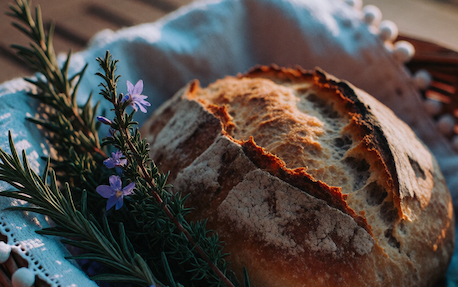
If you’ve never heard of it before, Lughnasadh (you’ll also hear people call it Lammas) is the first harvest festival on the Wheel of the Year. Traditionally it’s celebrated around August 1st and marks the beginning of the harvest season. The name Lughnasadh comes from Irish tradition, while Lammas comes from an old English word connected to bread made from the first grain harvest.
More than anything, though, I think it’s a celebration of gratitude. Not the kind where you force yourself to list things you’re thankful for because you feel like you should. The quiet kind.
The kind that sneaks up on you when you’re standing outside and suddenly notice that summer is beginning to change. The light feels different. The mornings are a little quieter. The trees look just a little fuller than they did a few months ago.
The Wheel has turned again.
Since becoming a Druid, I’ve started celebrating the evening before.
Many Druids begin their festivals at sunset because, traditionally, that’s when the new day begins. I love that way of seeing time. It feels less like checking a date off the calendar and more like standing on the threshold of something new.
Instead of waking up and realising it’s Lughnasadh, I get to watch it arrive. I get to stand outside while the sun slowly disappears, listen to the birds settling in for the night, and welcome another turning of the Wheel.
That feels sacred to me.
One thing I’ve really come to appreciate about Druidry is that it doesn’t ask me to pretend I know things I don’t.
The truth is, we don’t know exactly what every ancient Druid did during Lughnasadh. History leaves us with pieces, not complete pictures. But we do know this season mattered. Communities gathered. People celebrated the harvest. There was food, music, storytelling, friendly competition, and gratitude for the land that had carried them through another growing season.
Honestly, I don’t feel the need to recreate every ancient custom.
I’m not trying to live in the past.
I’m trying to live well right now.
Modern Druidry, at least the way I practice it, isn’t about pretending I’m somewhere else or in another century. It’s about paying attention to the place I’m actually standing.
The trees I know.
The birds I recognize by their songs.
The herbs growing nearby.
The storms that roll through.
The seasons unfolding around me instead of only reading about the ones someone else experienced a thousand years ago.
To me, that’s where Druidry comes alive.
Lughnasadh also feels deeply connected to herbalism.
The more I study plants, the more I realise herbalism isn’t just about learning what herb helps with what symptom.
It’s about relationship. It’s about learning patience, observation, and accepting that every plant has its own rhythm—not everything is ready just because I am.
Rosemary has become one of my favourite herbs. Herbalists have traditionally used it to support memory and circulation, but I also love what it represents spiritually: protection, clarity, and remembrance.
It feels like the perfect Lughnasadh herb.
This is a season for remembering.
Remembering what we’ve learned.
Remembering what we’ve survived.
Remembering that growth often happens so slowly we don’t even notice it until we stop long enough to look back.
Basil always makes me smile too. Beyond the kitchen, it’s often connected with abundance, prosperity, and blessing. Not because it magically makes life perfect, but because it reminds me to notice what’s already here.
Sometimes abundance looks like a full pantry.
Sometimes it looks like healing.
Sometimes it looks like finally feeling a little more like yourself.
And honestly… that’s enough.
So tonight I’m keeping things simple.
I’ll head outside just before sunset with a green candle, some rosemary, a bay leaf, and a little lavender incense. I’ll spend some time beneath my sweet gum trees because they’ve become part of my practice over the past year. They’ve listened to my prayers, my worries, my excitement, and plenty of ordinary days too.
I’ll light my candle, take a few deep breaths, and hold the rosemary in my hands while I think about what has grown in my life since spring—not what I’ve accomplished, but how I’ve changed.
Then I’ll write one word on a bay leaf.
Just one.
A quality I want to keep nurturing as summer slowly gives way to autumn.
I’ll leave the bay leaf beneath one of my sweet gum trees as a quiet thank you, spend a few more minutes listening to the evening around me, and head home.
No elaborate ritual.
No trying to make the moment into something bigger than it needs to be.
Just gratitude.
I think that’s one of the biggest lessons Lughnasadh has to offer.
Not every harvest grows in a field.
Sometimes the harvest is a healthier nervous system.
Sometimes it’s finally trusting yourself.
Sometimes it’s setting boundaries.
Sometimes it’s learning something new.
Sometimes it’s simply realising you’re becoming the person you hoped you’d be.
Those things deserve celebrating too.
So wherever you are, I hope you take a little time to step outside this evening or tomorrow. Look around. Breathe deeply. Thank the earth for another season.
And maybe ask yourself the same question I’ll be asking beneath my sweet gum trees: What has grown in me that I almost forgot to celebrate?